Best Commercial Espresso Machines
As an Amazon Associate, I earn from qualifying purchases. Some links may earn us a commission at no extra cost to you.
Buying a commercial espresso machine comes down to two things: service capacity (how fast you can produce drinks during real rushes) and install reality (power, plumbing, water treatment, and service support). Here are five options that are different from the products in your existing draft.
Top picks
Nuova Simonelli Appia II Volumetric 2-Group — Best for most busy cafés that want a straightforward 2-group
A practical 2-group machine built for café workflow: volumetric dosing helps keep output consistent when multiple people are on bar.
Why it wins: dependable 2-group throughput with repeatable, staff-friendly dosing.

- Volumetric Dosing: Pre-programmed at Simonelli but can also be programmed to fit your menu. Program...
- Manual Dosing: Provides flexibility for manual control when needed for customized espresso...
- Cool Touch Wands: Safer steam wands that remain cool to touch and are easier to clean during...
Pros
- 2-group capacity suits steady rushes
- Volumetric dosing supports consistency across staff
- Straightforward “daily driver” workflow
Cons
- Confirm your exact voltage/amps on the listing
- Requires proper water treatment
- Commercial maintenance is unavoidable
Trade-offs / who should skip (failure cases)
Skip if you can’t support a plumb-in install or don’t have technician coverage.
Skip if you’re very low volume (small office) and won’t use 2 groups.
Scores: Performance 4/5 | Service capacity 4/5 | Ease of use 4/5 | Value 4/5
La Spaziale S2 EK 2-Group — Best for cafés that want a proven heat-exchanger workhorse
A strong commercial-style 2-group option when you want a traditional bar workflow and the capacity to keep moving.
Why it wins: built for real service pacing with a familiar 2-group format.
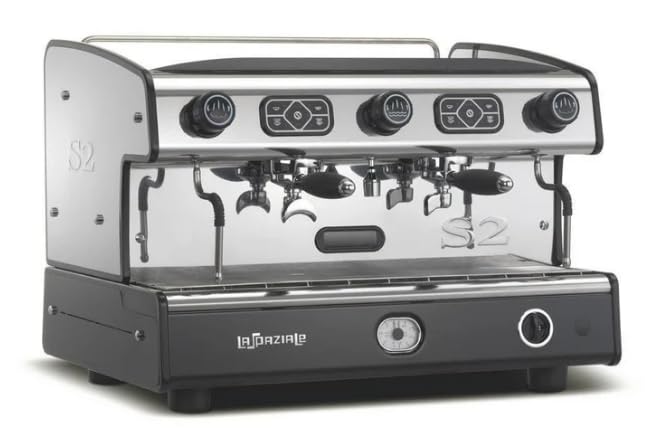
- Volumetric machine with proportioned dose setting
- 220 V
- ETL/NSF certified for commercial use
Pros
- 2-group output headroom for regular rushes
- Familiar café workflow for teams
- Good fit for espresso + milk drink programs
Cons
- Variant details matter (confirm exact configuration)
- Not a small-counter machine
- Water treatment is non-negotiable
Trade-offs / who should skip (failure cases)
Skip if your electrical/plumbing situation isn’t commercial-ready.
Skip if you’re a one-person slow bar—this can be more machine than you need.
Scores: Performance 4/5 | Service capacity 4/5 | Ease of use 4/5 | Value 4/5
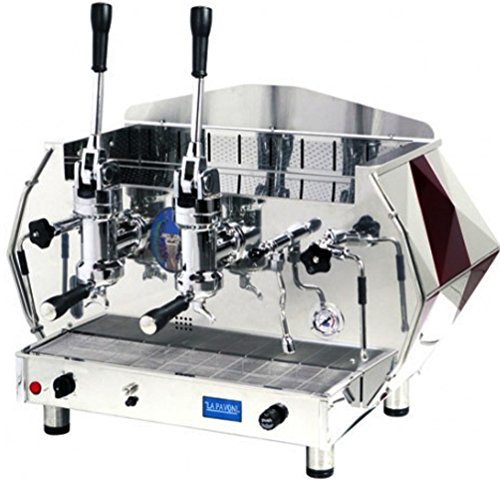
La Pavoni Diamante Lever 2-Group — Best for lever “theater” and signature espresso
If your concept wants lever-driven identity and you can train staff well, this is the kind of machine that can become part of the experience.
Why it wins: lever workflow + serious 2-group capacity for specialty concepts.
Pros
- 2 groups for real service pace
- Strong brand identity for craft-focused bars
- Great fit when you want a “signature” experience
Cons
- Training-heavy compared to push-button machines
- Large footprint
- Not ideal for fast-turnover staff environments
Trade-offs / who should skip (failure cases)
Skip if you need quick training and maximum consistency across rotating staff.
Skip if you want push-button repeatability over barista-driven control.
Scores: Performance 4/5 | Service capacity 4/5 | Ease of use 2/5 | Value 3/5
Fracino Bambino 1-Group — Best for tight spaces and lighter commercial volume
A smart direction for kiosks, small restaurants, or offices that want real espresso hardware but don’t need multi-group throughput.
Why it wins: compact commercial format for lower-to-mid drink volume.
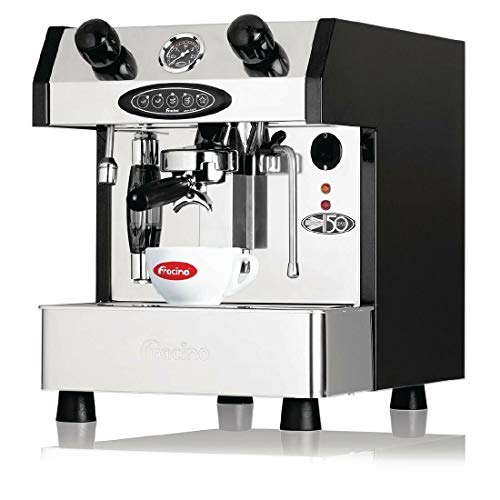
- Electronically controlled.
- Four accurately pre-programmed coffee measures.
- Automatic group cleaning cycle.
Pros
- Smaller footprint than most commercial machines
- Good fit for modest daily volume
- Easier to justify when space is limited
Cons
- 1 group limits peak throughput
- Still needs proper water treatment
- Not ideal for sustained lines
Trade-offs / who should skip (failure cases)
Skip if you routinely have lines or want two people pulling shots at once.
Skip if espresso is a major revenue driver during peak windows.
Scores: Performance 3/5 | Service capacity 2/5 | Ease of use 4/5 | Value 4/5
Faema Faemina (1 group) — Best premium single-group for upscale office/showroom or controlled volume
A premium single-group choice when you care about presentation and quality in a controlled-volume setting more than pure speed.
Why it wins: premium single-group experience for curated service.
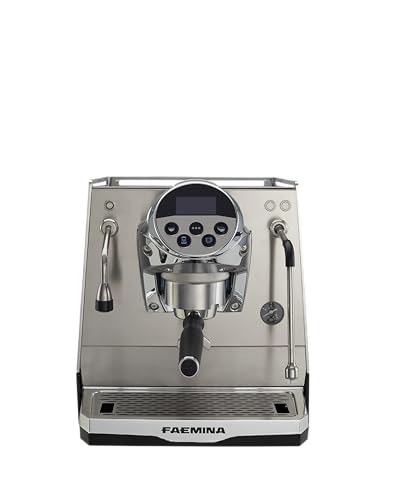
- CLASSY ALUMINUM DESIGN: Crafted in Italy with elegant lighting aluminum and stainless steel...
- AUTOMATIC STEAM WAND: One-touch system froths milk or plant-based beverages with perfect texture and...
- DUAL BOILER PRECISION: Independent boilers for brewing and steaming ensure stable temperature and...
Pros
- Premium build and design language
- Great for controlled-volume espresso programs
- Strong fit for brand-forward spaces
Cons
- 1 group caps peak drink output
- Big/heavy for a single-group
- Overkill if you just need speed
Trade-offs / who should skip (failure cases)
Skip if you need rush throughput—choose a 2-group.
Skip if you want the simplest ownership experience.
Scores: Performance 4/5 | Service capacity 2/5 | Ease of use 4/5 | Value 3/5
Quick compare (fast picks)
- Best overall 2-group café choice: Nuova Simonelli Appia II Volumetric 2-Group — B07DQYT1SZ
- Best 2-group workhorse alternative: La Spaziale S2 EK 2-Group — B0F5FXJ88W
- Best lever identity machine: La Pavoni Diamante Lever 2-Group — B00XL7I1RS
- Best for tight space + lighter volume: Fracino Bambino 1-Group — B084Y8XT84
- Best premium single-group for controlled volume: Faema Faemina — B0FS7YKS6S
Buying guide
Choose groupheads based on your real bottleneck
- 2-group: the default for most small-to-mid cafés that see lines.
- 1-group: best when space/power is limited or volume is modest.
Don’t ignore install reality
Commercial machines often require:
- Specific electrical (voltage/amps)
- Plumbing (and usually a drain plan)
- Water filtration/softening
Two common failure cases
- Buying a 2-group for a bar that can’t support install/service.
- Running without water treatment (scale issues, downtime, inconsistent results).
FAQs
Are these true commercial machines?
They’re commonly sold/configured for commercial-style installs, but you still need to confirm your exact power and plumbing requirements on the specific Amazon listing.
Is volumetric operation worth it?
For many cafés, yes—because it helps standardize output across staff. It doesn’t replace training, but it can reduce variability.
What matters as much as the machine?
Your grinder(s), water quality, workflow, and technician support.
As an Amazon Associate, I earn from qualifying purchases.