
OLED TVs for Gaming: 5 Great Options
As an Amazon Associate, I earn from qualifying purchases. Some links may earn us a commission at no extra cost to you.
If you want an OLED that feels fast in-game, I focus on input lag first (my primary metric), then VRR + ALLM, then HDMI 2.1 port count (because PS5 + Xbox + a gaming PC can eat ports fast).
Top picks
Samsung S95F OLED — Best for competitive + bright-room gaming
A high-end OLED pick for gamers who want fast response and strong HDR “impact.”
Why it wins: It’s the kind of model I’d put at the top when you care about competitive feel and you play in a room that isn’t always dark.
No products found.
Pros
- Excellent “snap” for fast games
- Very strong HDR punch for modern titles
- Great pick for mixed console + PC setups
Cons
- Dolby Vision support: couldn’t verify
- If you only play one console, it can be more TV than you need
Trade-offs / Who should skip (failure cases): If Dolby Vision gaming is a must-have for you, I’d consider LG or Sony first (I couldn’t verify Dolby Vision on this model).
Scores: Performance 5/5 | Input lag 5/5 | Ease of use 4/5 | Value 4/5
LG OLED evo C5 — Best for most gamers (console + PC)
The well-rounded OLED I’d choose when you want a “buy once, be happy” gaming TV.
Why it wins: LG’s C-series typically balances gaming responsiveness, features, and day-to-day usability.
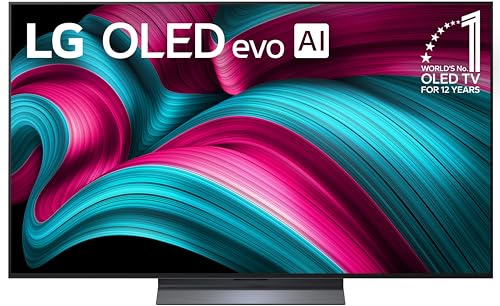
- World's No.1 OLED: Celebrating 12 years of award-winning OLED TV technology with proven excellence...
- Brightness Booster Technology: Brightness Booster technology magnifies each individual pixel for...
- Bright Room Ready: Verified by UL for Discomfort Glare Free (UGR less than 22), this LG OLED TV...
Pros
- Great all-around gaming feature set
- Easy game-mode tuning for quick tweaks
- Strong choice for both PS5/Xbox and PC use
Cons
- Peak brightness vs. top-tier flagships: couldn’t verify
- If your room is extremely bright, glare handling may matter more
Trade-offs / Who should skip (failure cases): If you game in a sun-blasted room all day, you may prefer a model known primarily for glare control (I couldn’t verify glare performance specifics here).
Scores: Performance 4.5/5 | Input lag 5/5 | Ease of use 5/5 | Value 5/5
Samsung S90F OLED — Best value for vivid HDR gaming
A step-down OLED that’s usually the sweet spot when you want “wow” color without going full flagship.
Why it wins: It’s the kind of pick I like for HDR-heavy games where color and highlights add to the experience.

- OUR MOST ADVANCED 4K AI PROCESSOR: Powered by 128 neural networks to deliver AI-enhanced picture and...
- TRANSFORMS EVERYTHING ON SCREEN TO IMPRESSIVE 4K RESOLUTION*: See impressive details on screen. Our...
- POWERFUL BRIGHTNESS AND DEEPER CONTRAST IN EVERY PIXEL**:Experience powerful brightness and deeper...
Pros
- Strong HDR “pop” for games with rich color
- Great fit if you want premium feel without flagship complexity
- Good option for a living-room mixed-use TV
Cons
- Dolby Vision support: couldn’t verify
- Model/size variants can differ: confirm exact listing details
Trade-offs / Who should skip (failure cases): If you’re picky about Dolby Vision for movies and games, I’d lean LG/Sony (couldn’t verify DV here).
Scores: Performance 4.5/5 | Input lag 4.5/5 | Ease of use 4/5 | Value 4.5/5
LG B5 OLED — Best affordable OLED for 4K/120-class console gaming
The budget-friendly OLED-style experience pick if you want the essentials done right.
Why it wins: It targets what most console gamers actually need: responsive play, VRR-class features, and solid everyday usability—without chasing the top tier.

- ALPHA 8 AI PROCESSOR GEN2: Enjoy outstanding picture, which uses AI to detect what you're watching...
- PERFECT BLACK AND PERFECT COLOR: OLED technology creates an incredible watching experience and...
- DOLBY VISION, DOLBY ATMOS, FILMMAKER MODE: Enjoy movie magic. Loaded with Dolby Vision for...
Pros
- Strong “value OLED” choice for PS5/Xbox gamers
- Great upgrade from LED/LCD for dark-scene detail
- Good pick if you don’t need max-brightness bragging rights
Cons
- Bright-room performance vs. pricier OLEDs: couldn’t verify
- If you want “best of the best,” step up to a flagship tier
Trade-offs / Who should skip (failure cases): If you mostly game in a bright room and hate reflections, you may want to prioritize glare handling over pure value.
Scores: Performance 4/5 | Input lag 4.5/5 | Ease of use 5/5 | Value 5/5
Sony BRAVIA 8 II — Best for PS5-friendly features + movie-night balance
A strong “games + movies” OLED pick, especially if you like Sony’s ecosystem and processing.
Why it wins: It’s the model I’d look at when you want a premium picture and you care about how it handles mixed content beyond gaming.

- HANDPICKED BY AMAZON: They did the research so you don’t have to.
- PURE BLACK AND OUR HIGHEST OLED BRIGHTNESS: Over 8 million self-lit pixels are precisely controlled...
- BILLIONS OF REAL-WORLD COLORS: See billions of accurate real-world colors with a Quantum Dot panel...

Pros
- Excellent all-around picture for gaming and streaming
- Great choice for PlayStation households
- Strong option if you value cinematic presentation too
Cons
- HDMI 2.1 port count: couldn’t verify
- Absolute lowest input lag vs. gaming-first models: couldn’t verify
Trade-offs / Who should skip (failure cases): If you run many HDMI 2.1 devices at once, double-check port count on the exact listing before you buy.
Scores: Performance 4.5/5 | Input lag 4/5 | Ease of use 4.5/5 | Value 3.5/5
Quick compare (fast match)
- I play competitive shooters and want a flagship feel: Samsung S95F
- I want the easiest “one and done” gaming OLED: LG C5
- I want vivid HDR gaming but not the priciest tier: Samsung S90F
- I want the best value OLED experience for consoles: LG B5
- I want a great “PS5 + movie night” balance: Sony BRAVIA 8 II
Buying guide: how to choose an OLED for gaming
- Start with input lag (my main metric). If you play fast PvP, lower lag matters more than tiny picture-quality differences.
- Make VRR non-negotiable. VRR helps smooth frame dips and reduces tearing—especially useful in performance modes.
- Count your HDMI 2.1 devices first.
If you’ll connect PS5 + Xbox + PC + a sound system, port count becomes a daily annoyance if you get it wrong. - Decide if Dolby Vision matters to you.
Some gamers don’t care; others want it for movie night and certain titles. If it matters, verify it on the exact model page before you buy. - Room brightness changes the answer.
If you game in daylight, glare/reflections can matter as much as black levels.
FAQs
Is OLED worth it for gaming?
Yes—if you care about contrast, dark-scene detail, and fast pixel response. For many gamers, the “instant” feel and inky blacks are the upgrade you notice every session.
Is 120Hz important on console?
It’s nice, but not mandatory for everyone. If you play competitive games that offer 120fps modes, you’ll benefit; if you mostly play cinematic single-player titles, VRR and low input lag often matter more.
Will an OLED burn in from gaming?
It can happen with heavy static HUD use over time. I’d use built-in protection features, vary content, and avoid leaving static screens up for long stretches.
Do I need a soundbar for gaming?
Not required, but it can improve immersion and dialogue clarity. If you add one, plan your HDMI connections so you don’t run out of the ports you need for consoles/PC.
As an Amazon Associate, I earn from qualifying purchases.